
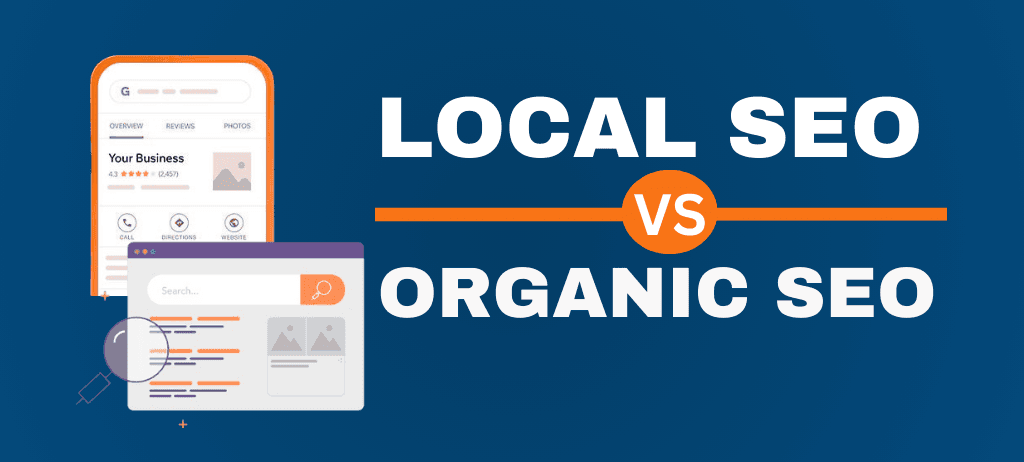
Local SEO and Organic SEO are two distinct strategies in digital marketing. Both aim to improve a website’s visibility, but they serve different purposes.
It is essential to understand the difference between local and organic SEO for any business. The goal of local SEO is to optimize a business for a specific geographic region. In other words, it helps businesses appear in local search results, such as when someone searches for “pizza near me”.
“Organic SEO, on the other hand, targets broader search queries without geographic constraints. It aims to improve overall search engine rankings and attract a wider audience. By knowing how each works, you can better tailor your SEO strategy to meet your business goals. Let’s explore the key differences and how each can benefit your business.
What Is Organic SEO?
While Local SEO focuses on optimizing a business for a specific geographic area, Organic SEO works on improving the search engine ranking on a global or national level. The purpose of this section is to explore the concept of Organic SEO.
Definition And Purpose
Organic SEO is the practice of optimizing your website content to appear in the top positions of search engine results pages (SERPs) without paying for ads. The main goal is to improve keyword ranking and drive traffic to your site naturally.
Here’s what Organic SEO aims to achieve:
- Increase visibility: By ranking higher in search results, your website becomes more visible to potential visitors.
- Drive quality traffic: Engage users who are genuinely interested in your content or products.
- Build trust and credibility: Appearing in top search results helps establish your site as an authority in your field.
Organic SEO involves various strategies, such as:
- Keyword research: Identifying the terms people use to search for your products or services.
- Content creation: Producing high-quality, relevant content that answers users’ queries.
- On-page optimization: Ensuring your website’s structure and content are optimized for search engines.
- Backlinks: Acquiring links from other reputable websites to enhance your site’s authority.
By focusing on these areas, Organic SEO helps improve your site’s overall performance and user experience.
How It Works
Organic SEO works through a combination of techniques designed to satisfy search engine algorithms and user intent. Here’s a breakdown of how it functions:
- Keyword Research:
- Identify relevant keywords.
- Analyze search volume and competition.
- Integrate keywords naturally into your content.
- Content Creation:
- Produce informative and engaging content.
- Update content regularly to keep it fresh.
- Use multimedia (images, videos) to enrich the user experience.
- On-Page Optimization:
- Optimize meta tags (title, description).
- Use header tags (H1, H2) properly.
- Ensure mobile-friendliness and fast loading times.
- Backlinks:
- Secure links from authoritative websites.
- Use guest posting and outreach strategies.
- Monitor and disavow spammy links.
Search engines like Google use complex algorithms to rank pages. They consider various factors, including relevance, quality, and user experience. By adhering to these principles, your site can achieve higher rankings and attract more organic traffic.
Importance For Businesses With A Broader Target Audience
For businesses aiming to reach a wider audience, Organic SEO is essential. Here’s why:
- Global Reach:
- Organic SEO helps your website appear in search results worldwide.
- It is ideal for e-commerce or information-based websites targeting multiple regions.
- Cost-Effective:
- Unlike paid ads, Organic SEO does not require continuous investment.
- Once your site ranks well, it continues to attract traffic with minimal ongoing costs.
- Builds Long-Term Credibility:
- High-ranking sites are perceived as trustworthy and authoritative.
- Users are more likely to click on organic results than paid ads.
- Enhances User Experience:
- Organic SEO focuses on high-quality content and a user-friendly website.
- Improved user experience leads to higher engagement and conversions.
What Is Local SEO?
The goal of Organic SEO is to increase a website’s search engine rankings on a global scale, whereas the goal of Local SEO is to increase local search rankings. We discuss the specifics of Local SEO and its importance for businesses with physical locations.
Definition And Purpose
In local SEO, your online presence is optimized to attract more business from relevant local searches. Google and other search engines are used for these searches. For example, a search for “best coffee shop near me” or “dentist in [city]” is likely to yield local results. The main purpose of Local SEO is to ensure that your business appears in these local search results.
- Targeted Audience: Local SEO focuses on people within a specific geographic area.
- Increased Visibility: Higher visibility in local searches can lead to more foot traffic and local customers.
- Competitive Edge: Helps small businesses compete with larger chains by focusing on local customers.
In contrast to Organic SEO, which aims for high rankings on a national or global level, Local SEO focuses on connecting with local customers. For businesses with physical locations or that serve specific geographic regions, this is particularly important.
How It Works (Google My Business, Citations, Local Reviews)
Local SEO works through several key components, each of which plays a vital role in improving your local search visibility. Here’s how it works:
| Component | Function |
| Google My Business (GMB) | It is essential to create and optimize a GMB listing. It includes accurate business information, photos, and customer reviews. |
| Citations | Mentions of your business name, address, and phone number (NAP) on other websites. Consistent NAP details across the web improve local search rankings. |
| Local Reviews | Getting positive reviews from customers. You can also boost your local SEO by responding to reviews. |
Google My Business is a free tool that allows you to manage how your business appears on Google Search and Maps. Verifying and keeping your GMB listing up-to-date is crucial. Citations from directories like Yelp, Yellow Pages, and local business listings also contribute to better local search rankings. Local reviews build trust and credibility, making them essential for local SEO.
Importance For Businesses With A Physical Presence
For businesses with a physical presence, Local SEO is indispensable. Here’s why:
- Increased Foot Traffic: Local SEO drives more people to your store, restaurant, or office.
- Cost-Effective Marketing: Compared to traditional advertising, Local SEO is more affordable and targets people already looking for your services.
- Community Connection: Helps build a strong local community presence, fostering customer loyalty.
Implementing effective local SEO tips can significantly enhance your visibility in local searches. It is particularly important for businesses like retail stores, restaurants, and service providers that cater to a local clientele. A strong local SEO strategy ensures that when people search for businesses like yours, they find you first. This not only increases foot traffic but also boosts sales and customer loyalty.
Key Differences Between Local SEO And Organic SEO
Local SEO and Organic SEO are two essential strategies in digital marketing. Both aim to improve a website’s visibility on search engines, yet they serve different purposes. Businesses can determine which strategy best suits their needs by understanding the key differences between Local SEO and Organic SEO. This post explores these differences in detail.
Search Intent: Local Vs. Global Searchers
The primary difference between Local SEO and Organic SEO is the search intent of the users. Local SEO targets searchers looking for services or products within a specific geographical area. This type of SEO is crucial for businesses like restaurants, local shops, and service providers.
Organic SEO, also known as traditional SEO, focuses on attracting a global audience. It aims to rank a website higher in search engine results pages (SERPs) for broader queries that are not location-specific.
Here is a comparison:
| Local SEO | Organic SEO |
| Targets local searchers | Targets global searchers |
| Uses local keywords (e.g., “coffee shop near me”) | Uses broader keywords (e.g., “best coffee shops”) |
| Often includes location-specific content | Focuses on general content |
Businesses must understand their audience’s search intent to choose the right SEO strategy. Local SEO is ideal for attracting nearby customers, while Organic SEO works best for reaching a wider, global audience.
Ranking Factors
The ranking factors for Local SEO and Organic SEO differ significantly. Knowing these factors helps in optimizing the website accordingly.
Local SEO considers:
- Google My Business (GMB) listing: A complete and optimized GMB profile is crucial.
- Local citations: Consistent NAP (Name, Address, Phone Number) information across online directories.
- Reviews and ratings: Positive customer reviews improve credibility and ranking.
- Local backlinks: Links from local websites enhance authority.
Organic SEO focuses on:
- Content quality: High-quality, relevant content is essential.
- Backlinks: High authority and relevant backlinks improve rankings.
- On-page SEO: Proper use of keywords, meta tags, and headings.
- User experience (UX): Fast loading times, mobile-friendliness, and easy navigation.
Both strategies require different approaches. Local SEO emphasizes local relevance and reputation, while Organic SEO focuses on content quality and user experience.
Business Types That Benefit From Each
Different businesses benefit from Local SEO and Organic SEO based on their target audience and goals.
Local SEO is best for:
- Brick-and-mortar stores: Shops, restaurants, and cafes that need local foot traffic.
- Service providers: Plumbers, electricians, and contractors who serve a specific area.
- Local events: Concerts, fairs, and community gatherings.
Organic SEO suits:
- Online businesses: E-commerce stores that ship globally.
- Content creators: Blogs, YouTube channels, and digital publications aiming for a broad audience.
- SaaS companies: Software providers offering services worldwide.
Choosing between Local SEO and Organic SEO depends on the business model and target audience. Local SEO works well for businesses relying on local customers, while Organic SEO is ideal for those aiming to reach a global market.
Why Businesses Need Both Local And Organic SEO
In local SEO, your online presence is optimized to attract more business from relevant local searches. Organic SEO, on the other hand, aims to improve your website’s visibility on a broader scale through various optimization techniques. Local and organic SEO are both necessary for businesses to maximize their reach and growth potential.
How They Complement Each Other
Organic and local SEO work together to help businesses gain a competitive edge. They complement each other in the following ways:
- Broader Reach: Organic SEO helps you reach a broader audience beyond your local area, attracting potential customers globally.
- Targeted Traffic: Local SEO strategies attract nearby customers who are more likely to visit your physical store or use your local services.
- Increased Visibility: Your business will appear in both local pack and organic search results, increasing your online visibility.
- Brand Trust: Consistently appearing in local and organic search results builds trust and credibility with your audience.
Consider this simple table to understand their roles better:
| Aspect | Local SEO | Organic SEO |
| Focus | Local audience | Global audience |
| Goal | Local traffic | Overall traffic |
| Example Tactics | Google My Business, local citations | Content marketing, link building |
Utilizing both strategies ensures that your business not only attracts local customers but also builds a strong online presence that appeals to a wider audience.
Case Studies
Here are some case studies that highlight the importance of using both Local and Organic SEO:
Joe’s Coffee Shop in New York combined local and organic SEO strategies. Their Google My Business profile was optimized and customers were encouraged to leave reviews. They also invested in organic SEO by creating a blog with coffee-related content. The result? A 50% increase in local foot traffic and a 30% increase in online orders from outside the local area.
Case Study 2: Tech Solutions Inc.
Tech Solutions Inc., a tech support company, used both strategies to boost their online presence. They targeted local keywords for their services and optimized their website for organic searches. They also created informative content about tech support issues. This resulted in a 40% increase in website traffic and a 25% increase in local client inquiries.
These case studies show the power of combining local SEO strategy and organic SEO optimization. By doing so, businesses can achieve significant growth and visibility, attracting both local and global customers.
Organic SEO Best Practices
Organic SEO involves techniques to improve a website’s visibility on search engines. Local SEO focuses on optimizing for location-based searches. Organic SEO Best Practices are crucial for achieving higher rankings and driving more traffic to your site. Let’s dive into some essential practices.
Keyword Research And Targeting
Effective keyword research is the cornerstone of organic SEO. Identifying the right keywords can help attract the right audience. Here are some tips:
- Use tools like Google Keyword Planner and SEMrush.
- Analyze competitors’ keywords.
- Focus on long-tail keywords for better conversions.
Targeting these keywords involves strategically placing them in:
- Title tags
- Meta descriptions
- Headings (H1, H2, H3)
- Content body
Remember, keyword stuffing can harm your SEO. Balance is key.
On-page SEO
On-page SEO involves optimizing individual pages to rank higher. It includes:
- Using meta tags effectively
- Writing compelling meta descriptions
- Optimizing headers (H1, H2, H3) and images
- Implementing structured data
| Element | Optimization Tip |
| Title Tag | Include primary keyword, keep it under 60 characters |
| Meta Description | Write a unique, engaging description with keywords |
| Header Tags | Use keywords, structure content logically |
Link Building Strategies
Link building enhances domain authority. Quality backlinks signal to search engines that your site is trustworthy. Here are some strategies:
- Guest posting on reputable sites
- Creating shareable content
- Engaging in forums and communities
- Utilizing broken link building
Remember, quality over quantity. Focus on acquiring links from high-authority websites.
Content Marketing And E-A-T
Content marketing is about creating valuable content. E-A-T stands for Expertise, Authoritativeness, and Trustworthiness. To enhance E-A-T:
- Publish well-researched articles
- Get expert contributions
- Cite credible sources
- Update content regularly
Valuable content attracts more visitors and earns trust.
Mobile Optimization And Page Speed
Mobile optimization ensures your site performs well on mobile devices. Page speed is equally crucial. Tips for both:
- Use responsive design
- Optimize images
- Leverage browser caching
- Minimize CSS and JavaScript
Tools like Google’s Mobile-Friendly Test can help. Faster loading times improve user experience and rankings.
Local SEO Best Practices
Local SEO best practices can significantly improve your local search rankings. The following are some essential Local SEO strategies:
Google My Business Optimization
Optimizing your Google My Business (GMB) profile is crucial to effective Local SEO. Local search results and Google Maps visibility are enhanced by a well-optimized GMB profile.
Here are some best practices for Google My Business optimization:
- Complete Your Profile: Fill in every section of your GMB profile. Include business name, address, phone number, and website URL.
- Choose the Right Categories: Select the most relevant categories for your business. This helps Google understand what your business offers.
- Add High-Quality Photos: Upload clear images of your business, products, and services. High-quality photos attract more views.
- Regular Updates: Keep your profile updated with new information, offers, and events. Regular updates keep your profile relevant.
Effective google my business management also involves monitoring and responding to customer reviews, which we’ll discuss later.
Local Keyword Optimization
Local keyword optimization is about incorporating location-specific keywords into your website content. This helps search engines connect your business to local searches.
Follow these steps for local keyword optimization:
- Research Local Keywords: Use tools like Google Keyword Planner to find keywords that include your city or neighborhood.
- Incorporate Keywords Naturally: Place local keywords in titles, meta descriptions, headers, and body text without keyword stuffing.
- Create Location-Specific Content: Write blog posts, articles, and service pages that focus on local events, news, and topics.
Here’s an example of how to integrate local keywords:
Nap Consistency
NAP stands for Name, Address, and Phone number. Ensuring NAP consistency across all online platforms is critical for Local SEO.
To maintain NAP consistency:
- Use the Same Format Everywhere: Your business name, address, and phone number should appear in the same format on your website, GMB profile, and online directories.
- Check and Update Listings: Regularly check your business listings on different platforms to ensure they match.
- Correct Inaccuracies: Fix any discrepancies immediately to avoid confusing search engines and potential customers.
Consistent NAP information builds trust with search engines and improves your local search rankings.
Getting Local Backlinks And Citations
Your website’s authority and relevance in local searches are enhanced by local backlinks and citations. Citations are online mentions of your business’s name, address, and phone number.
Strategies for acquiring local backlinks and citations:
- Submit to Local Directories: List your business in local online directories, such as Yelp, Yellow Pages, and industry-specific directories.
- Partner with Local Businesses: Collaborate with nearby businesses for guest blogging or joint promotions.
- Engage with Local Media: Reach out to local newspapers, blogs, and online magazines for features and articles.
Here’s a quick comparison of local directories and their importance:
| Directory | Importance |
| Yelp | High |
| Yellow Pages | Medium |
| Local Chamber of Commerce | High |
Encouraging Customer Reviews
Local search rankings and consumer trust are significantly influenced by customer reviews. You can drive more traffic to your business by getting positive reviews.
Encourage customer reviews with these tips:
- Ask Satisfied Customers: Directly ask happy customers to leave a review on your GMB profile.
- Make It Easy: Provide links to your review profiles in follow-up emails, receipts, and on your website.
- Respond to Reviews: Thank customers for positive reviews and address negative feedback professionally.
Here’s a sample email template to request reviews:
Dear [Customer Name],
Thank you for choosing [Your Business]. We hope you enjoyed our service.
Please take a moment to leave a review on our Google My Business profile: [Review Link].
Your feedback helps us improve and serve you better.
Best regards,
[Your Name]
[Your Business]
Consistent review management is a vital part of effective google my business management.
Which SEO Strategy Is Better For Your Business
Both strategies are part of search engine optimization (SEO), but they serve different purposes. While local SEO targets customers in a certain area, organic SEO improves your website’s visibility nationwide or globally.
When To Prioritize Local SEO
If you rely on local customers for your business, local SEO is essential. You can use this strategy to appear in local search results and on maps. Local SEO would be beneficial to a coffee shop, a plumbing service, or a local boutique, for example.
Key indicators to prioritize Local SEO:
- Your business has a physical location.
- You serve customers within a specific geographical area.
- You want to appear in Google Maps searches.
- Your target audience searches for local services.
Local SEO involves optimizing your Google My Business profile, building local citations, and acquiring reviews from local customers. Here is a table to summarize:
| Local SEO Tactics | Description |
| Google My Business | Optimize your profile to appear in local searches and maps. |
| Local Citations | Get listed in local directories and online platforms. |
| Customer Reviews | Encourage satisfied customers to leave positive reviews. |
When To Focus On Organic SEO
Your business might benefit from Organic SEO if it targets a broader audience. Organic SEO aims to improve your website’s visibility on search engines like Google for non-localized searches. E-commerce stores, online services, and informational blogs can benefit from this strategy.
Signs you should focus on Organic SEO:
- Your business operates nationwide or globally.
- You sell products or services online.
- Your target audience is not location-specific.
- You want to build long-term visibility and authority.
Organic SEO involves keyword research, content creation, and link building. Here is a table to summarize:
| Organic SEO Tactics | Description |
| Keyword Research | Identify relevant keywords to target in your content. |
| Content Creation | Publish high-quality, informative content on your website. |
| Link Building | Acquire backlinks from reputable websites. |
Hybrid Strategy: How To Use Both Effectively
In some cases, combining Local SEO and Organic SEO can yield the best results. This hybrid strategy is effective if your business has a physical location but also offers products or services online.
Steps to implement a hybrid strategy:
- Optimize your Google My Business profile for local searches.
- Create location-specific landing pages on your website.
- Publish blog posts targeting both local and broader keywords.
- Build backlinks from both local and national websites.
It is possible to capture local customers while building a broader online presence with a hybrid strategy. It combines the immediate benefits of Local SEO with the long-term gains of Organic SEO.
Here is a table to summarize:
| Hybrid Strategy Tactics | Description |
| Local and Broader Keywords | Target both local and non-local keywords in your content. |
| Location-Specific Pages | Create pages tailored to different locations you serve. |
| Diverse Backlink Profile | Acquire backlinks from both local and authoritative sites. |
Link Building
Link building is an important aspect of SEO. The process of link building involves obtaining links from other websites. This improves your site’s visibility and authority. But, the strategies for link building differ between Local SEO and Organic SEO.

Link Building For Organic SEO
Link building for Organic SEO focuses on gaining links from high-quality, relevant websites. These links help improve your site’s domain authority and search engine ranking. Here are some effective strategies for organic link building:
- Guest Blogging: Write articles for other blogs in your industry. Include a link back to your site.
- Content Marketing: Create valuable content that others want to link to. This includes blog posts, infographics, and videos.
- Social Sharing: Share your content on social media platforms. Encourage others to share and link to it.
- Influencer Outreach: Connect with industry influencers. Ask them to share your content or link to your site.
- Broken Link Building: Find broken links on relevant sites. Offer your content as a replacement.
Organic link building takes time and effort. But, the results are long-lasting. Quality backlinks signal to search engines that your site is a trusted source of information. This can lead to higher rankings and more organic traffic.
Link Building For Local SEO
Link building for Local SEO focuses on gaining links from local websites and directories. These links help improve your site’s relevance for local searches. Here are some effective strategies for local link building:
- Local Directories: Submit your site to local business directories. Ensure your NAP (Name, Address, Phone number) is consistent.
- Local Partnerships: Partner with local businesses. Exchange links on each other’s websites.
- Local Sponsorships: Sponsor local events or charities. Get a link back from their website.
- Local Reviews: Encourage customers to leave reviews on local review sites. Include a link to your site.
- Local News: Get featured in local news articles. Include a link to your site in the article.
Key Metrics To Measure SEO Success
Various metrics indicate how well your SEO strategies are performing when it comes to measuring SEO success. Here are the key metrics for both local and organic search engine optimization.
Organic SEO Performance Metrics
Organic SEO aims to improve your website’s ranking on search engines through non-paid methods. Here are some key metrics to measure its success:
- Organic Traffic: The number of visitors coming to your site through organic search results. Higher organic traffic indicates better visibility on search engines.
- Keyword Rankings: Tracking the position of targeted keywords in search engine results. Improved rankings show that your SEO strategies are effective.
- Click-Through Rate (CTR): The percentage of users who click on your link after seeing it in search results. A higher CTR indicates that your meta tags and descriptions are compelling.
- Backlinks: The number and quality of external links pointing to your website. Quality backlinks boost your site’s authority and improve rankings.
- Bounce Rate: The percentage of visitors who leave your site after viewing only one page. A lower bounce rate indicates engaging content.
- Conversion Rate: The percentage of visitors who complete a desired action, like purchasing or signing up. A high conversion rate indicates that your website is effective at converting visitors into customers.
Local SEO Performance Metrics
Local SEO focuses on optimizing your online presence for local searches. Here are the key metrics to measure its success:

- Local Search Rankings: Track your position in local search results. Higher rankings in local searches indicate effective local SEO strategies.
- Google My Business (GMB) Insights: Metrics from your GMB profile, such as views, searches, and actions. These insights show how well your business is performing locally.
- Local Reviews: The number and quality of reviews on platforms like Google and Yelp. Positive reviews enhance your local credibility and attract more customers.
- Local Citations: Listings of your business on local directories and websites. Consistent and accurate citations improve your local search visibility.
- Mobile Clicks to Call: The number of clicks on your phone number from mobile devices. Users who click more often engage with your business directly.
- Local Engagement: Metrics like social media interactions and local website visits. Increased engagement shows that your local audience is actively interacting with your content.
Both Local and Organic SEO require consistent monitoring and optimization. Focusing on these key metrics helps ensure that your strategies are driving meaningful results.
Conclusion
Local and organic SEO serve different purposes. Online success depends on both. Local SEO can help you attract customers in your area. Use organic SEO for a broader reach. Combining both can boost your visibility. Understand your goals and target audience.
Make sure strategies are implemented wisely. Make your online presence stronger. Your business will grow effectively. Keep up with the latest SEO trends. Take advantage of better search engine rankings.