
Building a strong brand identity means creating a unique look, feel, and personality for your business that people recognize instantly. It’s about knowing your audience, defining your core values, designing memorable visuals, and staying consistent everywhere your business appears. When done right, consistent branding can boost your revenue by 23-33% and turn first time buyers into loyal fans.
Think about brands like Apple or Nike. They stand out because people feel connected to them. A strong brand identity is like a person’s personality. It shows what your business is about and why people should pick you. When you get it right, customers trust you more and come back again.
In this guide, I’ll show you exactly how to build a brand identity that people remember, trust, and choose over your competitors.
Understand Your Target Audience Deeply
Before you pick colors or design logos, you need to know who you’re talking to. Your target audience is the group of people most likely to buy from you. They’re the folks whose problems your business solves.
Start by asking yourself:
- Who needs what I’m offering?
- What keeps them up at night?
- Where do they spend their time online?
- What makes them happy or frustrated?
Create a simple picture of your ideal customer. Give them a name, an age, and list their biggest challenges. This isn’t weird, it’s smart business.
When you know your audience deeply, every decision becomes easier. You’ll choose the right words, the right colors, even the right social media platforms.
Research shows that 87% of consumers said personally relevant content positively influences their feelings about a brand (WebFX). When your brand speaks directly to people’s needs, they listen.
Define Your Brand Core (Mission, Vision, and Values)
Your brand core is your business’s heartbeat. It’s why you exist beyond making money.
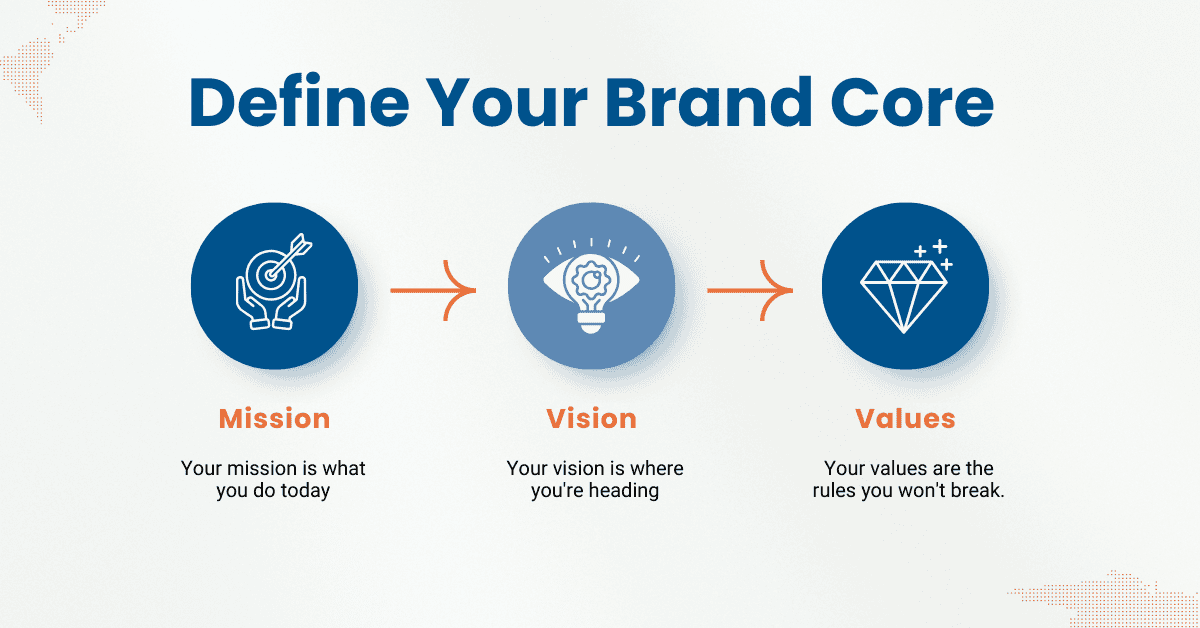
Your mission is what you do today. Keep it simple. For example: We help small business owners save time with simple accounting software.
Your vision is where you’re heading. Think big here: A world where every entrepreneur has financial clarity.
Your values are the rules you won’t break. Maybe it’s honesty, innovation, or putting customers first.
Write these down. Put them somewhere everyone in your company can see them. When you’re making tough decisions, these guide you.
Create a Unique Visual Identity (Logo, Colors and Typography)
Your visual identity includes your logo, colors, fonts, and any images you use. These should work together like a team.
Your Logo: Keep it simple. The best logos work in black and white and still look good when they’re tiny on a phone screen. Think of Apple, Nike, or McDonald’s, clean and memorable.
Your Colors: Colors trigger emotions. Blue feels trustworthy (that’s why 33% of the world’s most known brands use some shade of blue in their logos, according to Design Buddy). Red feels energetic. Green feels natural and calm. Pick 2-3 main colors and stick with them everywhere.
Your Fonts: Choose two fonts maximum, one for headlines and one for body text. Make sure they’re easy to read on screens and in print.
Craft Your Brand’s Voice and Unique Messaging Strategy
If your brand were a person, how would it talk? Your brand voice is your personality in words. Are you friendly and casual? Professional and serious? Fun and playful?
Pick 3-5 words that describe your brand’s personality. Once you know your voice, use it everywhere. website, emails, social media, even customer service calls.
Your messaging strategy is about what you say and how you say it. Create a simple statement that answers: What do you do and why should someone care?
Keep your messages clear. Avoid jargon. If a 10-year-old wouldn’t understand it, rewrite it. Remember, brand consistency can increase revenue by 10-20% (Marq), and that includes being consistent with how you communicate.
Tell Your Brand Story to Build Emotional Connections
People don’t just buy products. They buy stories they want to be part of.
Your brand story is the journey of how your business came to be. Why did you start? What problem were you trying to solve? What challenges did you overcome? Share the real stuff. The late nights, the failures, the moments of doubt. Authenticity wins every time.
Consider this: 62% of customers form emotional attachments to the brands they buy from the most (Capital One Shopping). When people feel connected to your story, they become more than customers, they become fans.
Share your story on your website’s “About” page. Post behind-the-scenes content on social media. Let customers see the humans behind the business.
And here’s a powerful stat: brands with strong emotional connections see customers who have three times higher lifetime value (Branding Mag).
Integrate Your Identity Across All Touchpoints
Your brand identity must look and feel the same everywhere customers find you. This means:
- Your website matches your business cards
- Your Instagram looks like your email newsletter
- Your packaging reflects your website design
- Your customer service sounds like your social media posts
Every place a customer interacts with your brand is called a touchpoint. Make a list of all yours: website, social media, emails, phone calls, physical location, packaging, receipts, everything.
Then check each one. Does it follow your brand guidelines? Does it use your colors, fonts, and voice?
The numbers don’t lie: companies with consistent brand presentation across all platforms can increase their revenue by up to 33% (Digital Journal). That’s one-third more money just from being consistent.
People need an average of 7 interactions to remember a brand (Netguru). Make each interaction count by keeping everything consistent.
Build Brand Loyalty through Community Engagement
Your best customers can become your biggest promoters. Build a community around your brand. This doesn’t mean you need thousands of followers. Start small. Engage genuinely.
Respond to comments on social media. Answer questions. Share user-generated content. Create a Facebook group or online forum where customers can connect.
Make people feel heard and valued. When someone has a problem, solve it quickly and kindly.
The payoff is huge: 43% of customers report spending more money on brands they’re loyal to (Zimmer Communications). Plus, 65% of business revenue comes from existing customers.
Show appreciation. Send thank-you emails. Feature customer stories. Offer loyalty rewards. These small gestures build strong bonds.
Perform Regular Brand Audits to Ensure Authenticity
A brand audit is a regular health check of how your brand looks, sounds, and performs in the real world. Every 6-12 months, take time to review:
- Are you using your brand colors and fonts consistently?
- Does your messaging still match your values?
- Has your audience changed?
- Are competitors doing something you should know about?
- Is your brand still authentic and true to your mission?
Look at all your materials, website, social posts, emails, and ads. Do they all feel like they come from the same company?
Ask your customers for feedback through surveys and reviews. What do people say about you? Their insights matter. Almost 90% of customers value the authenticity of brands when choosing where to shop (BusinessWire). If something doesn’t feel right, adjust it
Maintain Brand Consistency at Scale
As your business grows, keeping everything consistent gets harder. But it’s more important than ever. Create a brand style guide, a simple document that shows:
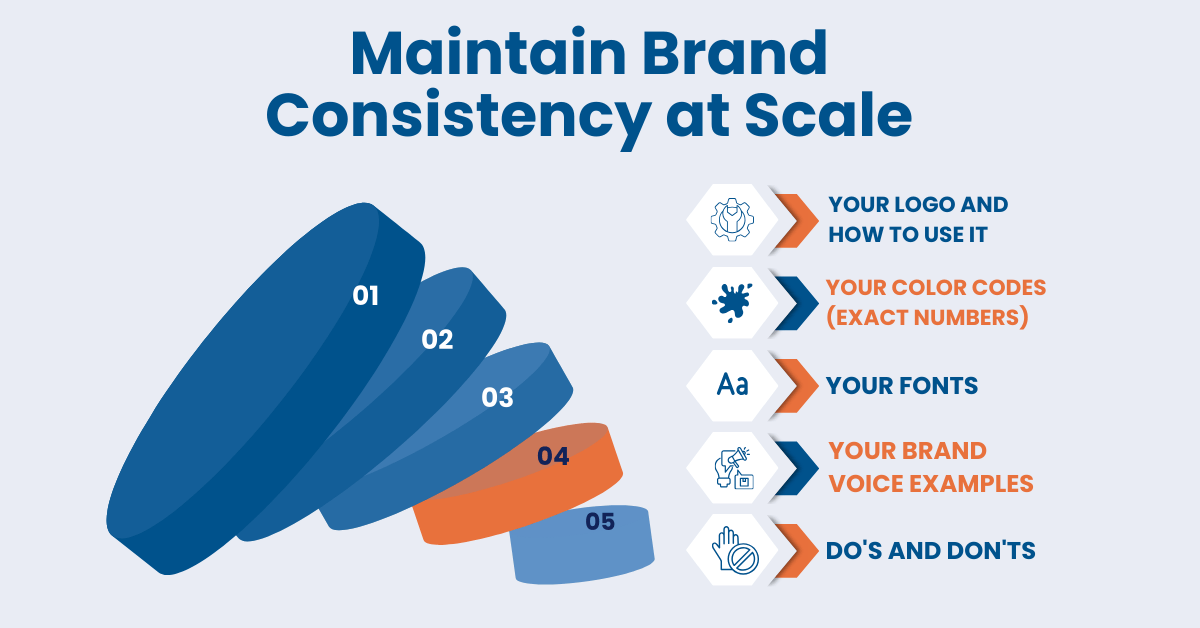
Share this guide with everyone on your team, partners, anyone who creates content for your brand. Use templates for common materials like social media posts, presentations, and emails. This saves time and keeps things looking uniform. Consider using brand management tools that keep all your assets in one place.
Train new team members on your brand guidelines. When everyone understands why consistency matters, they’re more likely to follow the rules.
The stats back this up: 85% of organizations have brand guidelines in place to improve brand consistency, but only 30% of brands use their brand guidelines regularly (Marq). Don’t create guidelines just to ignore them.
Conclusion
Building a strong brand identity isn’t rocket science, but it does take work. Start by knowing your audience inside and out. Define what you stand for with a clear mission, vision, and values. Create visual elements that pop and stick in people’s minds. Develop a voice that sounds like you, not like a robot.
Tell your story honestly. Show up consistently everywhere. Build real relationships with your customers. Check in regularly to make sure you’re staying true to yourself. The results speak for themselves. Consistent branding drives revenue growth, builds trust, and creates loyal customers who stick with you for years.
Frequently Asked Questions
What is brand identity?
Brand identity is the way your business looks and feels to people. It includes your logo, colors, words, and overall style that make you stand out.
Why is brand identity important for a business?
A strong brand identity helps customers remember you, trust you, and choose you over others. It can boost sales and build lasting bonds.
What are the key parts of a strong brand identity?
The main parts are your mission and values, logo and colors, how you talk to people, and keeping everything the same everywhere.
What's the difference between brand identity and branding?
Brand identity is your business’s look and core ideas. Branding is the ongoing work to share that identity and build feelings around it.
Why should I keep my brand consistent?
Being the same everywhere builds trust and makes people recognize you quickly. Inconsistent brands confuse customers and weaken loyalty.