
AI and voice search are fundamentally reshaping local SEO by enabling personalized, intent-driven results while automating traditional optimization tasks. AI analyzes vast data for better keyword research, creates hyperlocal content, manages reviews, and optimizes Google Business Profiles. Voice search requires conversational query optimization, direct answers for “near me” searches, and mobile-first content strategy.
What is the Current Impact of AI and Voice Search on Local SEO?
Local SEO is experiencing its most significant transformation since the mobile revolution. Over 25% of people use the voice search function several times a day, while Google AI Overviews appearing in 40.2% of queries for local businesses shows the scale of this shift.
The transformation involves three critical changes:
- AI enables hyper-personalized local results based on user behavior and context
- Voice search prioritizes conversational queries requiring direct answers
- Traditional keyword optimization is being replaced by intent-based content strategies
50% of the U.S. population engages with voice search daily, meaning half of your potential customers are using conversational queries like “Where’s the best Italian restaurant that delivers until midnight?” instead of typing “Italian restaurant Chicago delivery.”
Why Traditional Local SEO Methods Are Failing
Traditional local SEO tactics built around keyword stuffing and directory listings are becoming obsolete. The modern local search ecosystem operates on artificial intelligence that understands user intent, context, and behavior patterns in ways human optimization never could.
Local businesses can no longer rely on basic NAP (Name, Address, Phone) consistency and hope for results. AI algorithms analyze thousands of signals including user behavior, business reputation, content quality, and real-time relevance to determine local rankings.
How Has Consumer Search Behavior Changed?
Modern consumers expect instant, personalized answers. They don’t want to visit multiple websites to find business hours, read reviews, and check availability. Voice search amplifies this expectation because speaking feels more natural than typing detailed queries.
56% of smartphone users rely on voice search to find information about brands and businesses, indicating voice search has become a primary discovery method for local services.
When someone says “Find me a dentist accepting new patients with evening appointments,” they expect one perfect answer, not ten generic results.
What Makes AI-Powered Keyword Research Superior?
AI-powered keyword research tools analyze millions of search queries, seasonal patterns, competitor strategies, and emerging trends simultaneously. Tools like SEMrush‘s AI writing assistant, Ahrefs’ keyword difficulty predictor, and Google’s Performance Max campaigns use machine learning to identify opportunities human researchers would miss.
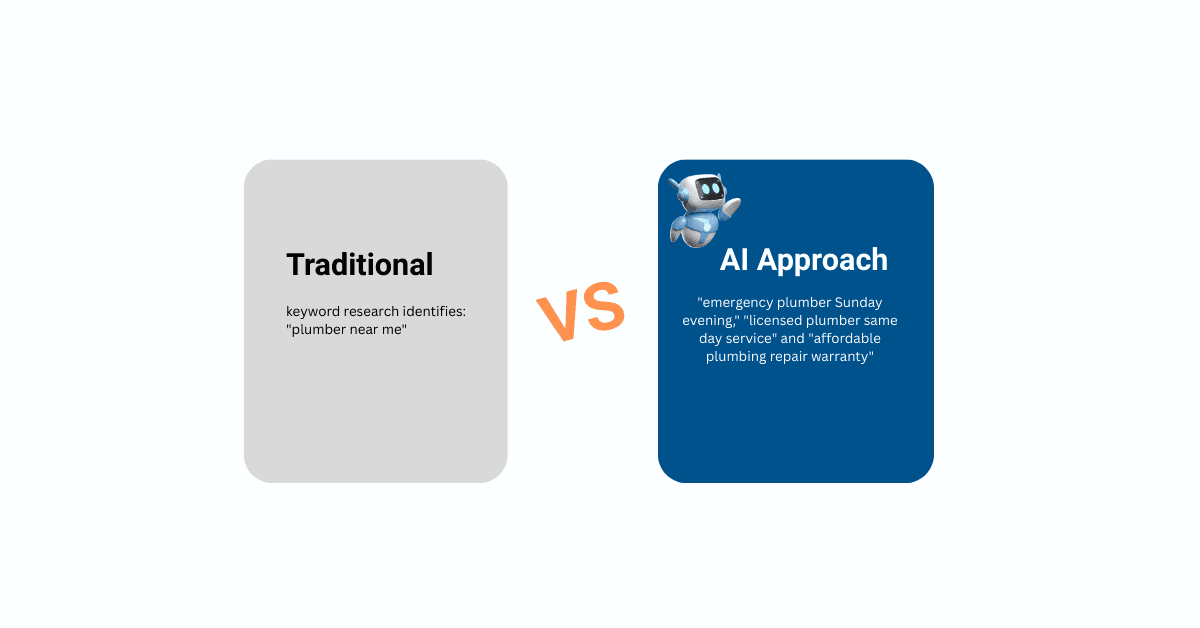
Benefits of AI Keyword Research:
- Predicts seasonal trends before they peak
- Identifies long-tail conversational queries
- Analyzes competitor gaps automatically
- Discovers local search patterns
- Monitors emerging opportunities in real-time
How Does AI Automate Content Creation for Local Businesses?
AI content tools help local businesses create hyperlocal content addressing specific neighborhood concerns, events, and community needs. Instead of generic service pages, businesses can generate location-specific content that resonates with local audiences.
Real-World Implementation: A home security company can use AI to create separate landing pages for:
- “Home security systems in Lincoln Park” (addressing local crime statistics)
- “Apartment security in River North” (focusing on building-specific needs)
- “Condo security in Gold Coast” (highlighting resident concerns)
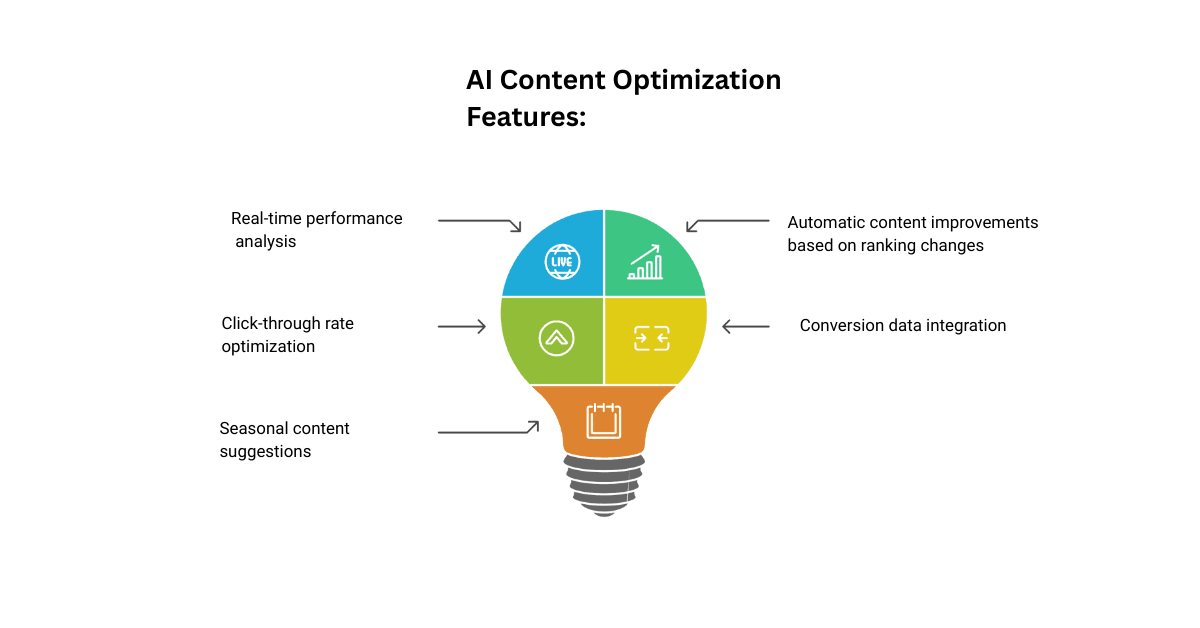
How is AI Revolutionizing Reputation Management?
AI-powered reputation management transforms how local businesses handle reviews and customer feedback. Tools like ReviewTrackers, Podium, and BirdEye use natural language processing to analyze review sentiment and identify trending issues.
Advanced AI Reputation Capabilities:
- Predicts which customers might leave negative reviews
- Identifies fake reviews through language pattern analysis
- Generates personalized response suggestions
- Monitors sentiment across multiple platforms
- Provides proactive issue alerts
How Does AI Enhance Google Business Profile Management?
12AM Agency has announced the launch of the 12AM Nova Engine, an advanced AI-powered platform designed to transform Google Business Profiles (GBP) into powerful local lead generation tools, reflecting the growing trend of AI-powered GBP optimization.
AI GBP Management Features:
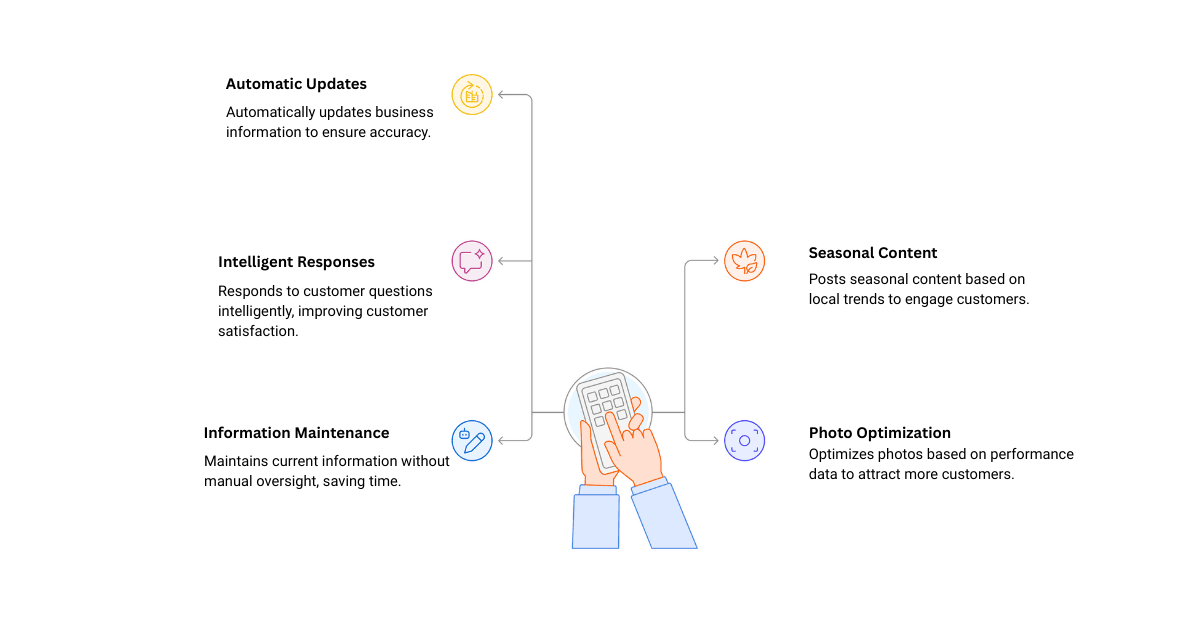
Time Savings: Businesses report saving 5–10 hours per month on average by automating GBP management with AI tools while seeing improved local search performance.
What Makes Voice Queries Different from Typed Searches?
Voice queries sound nothing like typed searches. People don’t say “restaurant Italian Chicago delivery.” They say “What’s a good Italian place that delivers to Lincoln Park tonight?” or “Find me the closest Italian restaurant with gluten-free options.”
Voice Search Growth: 153.5 million people in the U.S. will use voice assistants by the end of 2025, making conversational optimization increasingly important.
Optimization Strategy: Instead of targeting “emergency dentist,” create content answering “What should I do if I have a dental emergency at night?” and “How quickly can I see a dentist for severe tooth pain?”
Why Do Voice Searches Need Direct, Concise Answers?
Voice assistants read answers aloud, so content must be conversational and concise. Featured snippets become extremely valuable because they’re often chosen as voice search responses.
Essential Questions to Answer:
- “What are your hours today?”
- “Do you accept walk-ins?”
- “How much does [service] cost?”
- “Are you open on holidays?”
The goal is becoming the single best answer to specific local queries rather than competing for multiple keyword variations.
What Technical Requirements Support Voice Search?
71% of wearable device owners predict they’ll perform more voice searches, indicating voice search adoption continues expanding beyond smartphones to smartwatches, earbuds, and other connected devices.
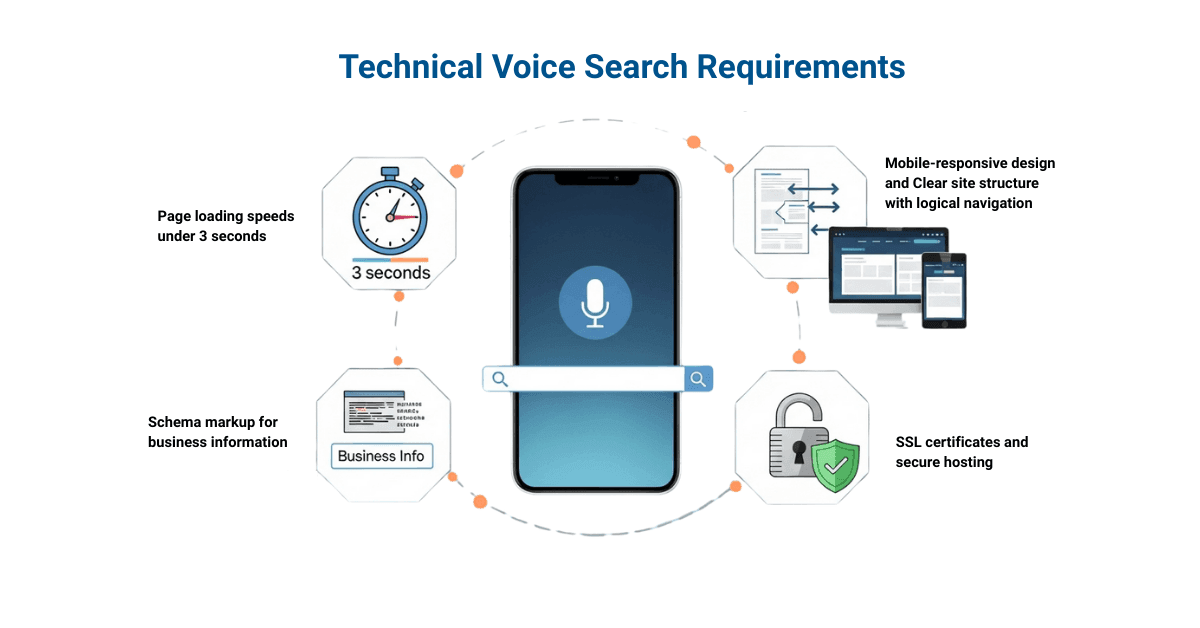
Voice search users expect immediate information access, making technical performance crucial for visibility.
What Makes Google Business Profile the Command Center?
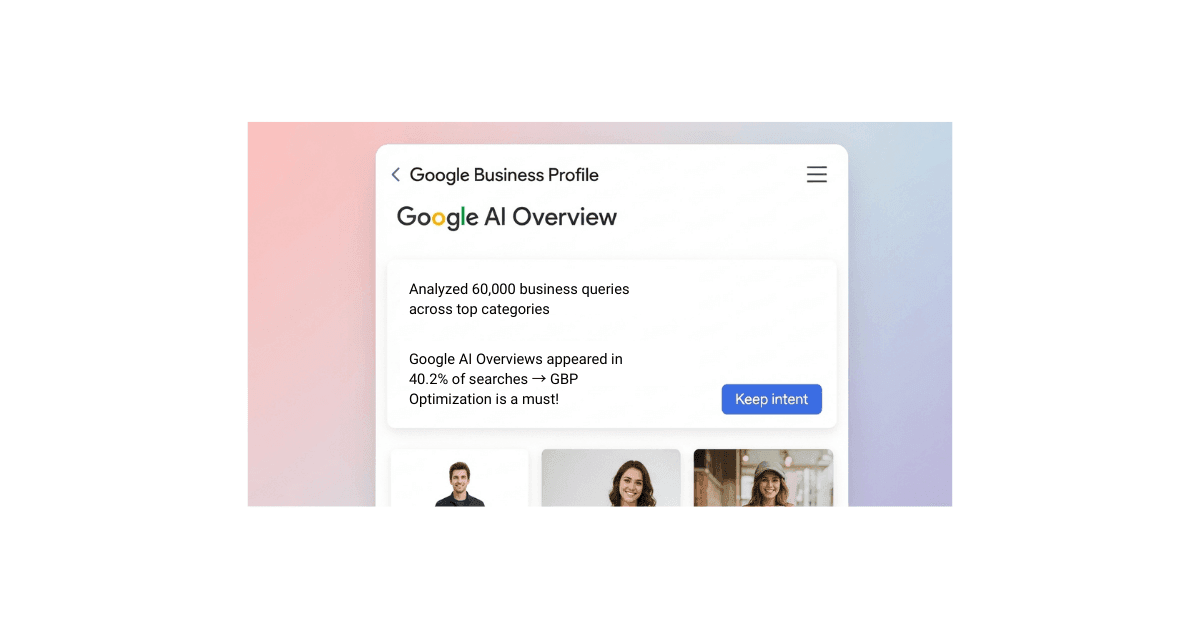
Your Google Business Profile serves as the command center for both AI and voice search optimization. Based on 60,000 total queries for businesses in the largest categories, we observed Google AI Overviews appearing in 40.2% of queries, making GBP optimization essential for AI search visibility.
Complete GBP Optimization Includes:
- Detailed business descriptions using conversational language
- Complete service lists with natural language descriptions
- High-quality photos with descriptive captions
- Regular posts addressing common customer questions
- Consistent review response strategies
- Accurate hours and holiday schedules
- Booking links and contact information
How Should Content Architecture Support Both AI and Voice?
Create content that serves both AI understanding and voice search queries by focusing on question-based architecture. Develop comprehensive FAQ sections addressing every possible customer question using natural language.
Customer Journey Content Organization:
- Discovery: “What services do you offer?” “Are you better than [competitor]?”
- Consideration: “How much does [service] cost?” “What’s included?”
- Decision: “How do I schedule?” “What should I expect?”
- Post-Service: “How do I maintain [product]?” “When should I return?”
This structure helps both AI algorithms understand your business and voice assistants find relevant answers for spoken queries.
What Technical Infrastructure is Required?
In 2024, 91% of respondents confirmed that SEO has positively affected both website performance and their overall marketing goals, but this requires meeting modern technical standards.
Essential Schema Markup:
- LocalBusiness schema with complete NAP information
- Service schema for each business offering
- Review schema for customer testimonials
- FAQ schema for common questions
- Event schema for special offers or seasonal services
Critical Technical Requirements:
- Core Web Vitals scores in the “Good” range
- Mobile-first responsive design
- SSL certificates and HTTPS
- Fast server response times
- Optimized images and media files
- Clean, crawlable site architecture
What is the Implementation Roadmap for AI and Voice Search Optimization?
30-Day Quick Win Checklist:
- Google Business Profile Audit: Ensure all information is complete, accurate, and uses conversational language
- Basic Schema Implementation: Add LocalBusiness and Service schema markup
- FAQ Content Creation: Develop 20 questions customers commonly ask via voice search
- Mobile Optimization: Ensure website loads quickly on mobile devices
- Review Monitoring Setup: Implement AI-powered review tracking and response systems
90-Day Strategic Implementation Plan:
- Advanced Content Strategy: Create neighborhood-specific landing pages and service content
- AI Tool Integration: Implement AI-powered keyword research and content optimization tools
- Voice Search Content Development: Create conversational content answering common customer questions
- Technical Optimization: Complete schema markup implementation and performance optimization
- Analytics Setup: Create reporting systems tracking AI and voice search performance
Conclusion:
The transformation from traditional local SEO to AI and voice search optimization represents the most significant change in local business marketing since the shift to mobile. 63% of respondents reported that Google AI Overviews (AIO) have positively impacted organic traffic, visibility, or rankings since its rollout in May 2024, proving that businesses optimizing for AI-powered search experiences are seeing real results.
Businesses that embrace these changes early will dominate local search results, while those that wait will find themselves increasingly invisible to potential customers. Local SEO success in 2025 and beyond requires understanding that customers don’t just search differently—they expect different experiences.
Voice search users want immediate, conversational answers. AI-powered search provides hyper-personalized recommendations. Meeting these expectations through strategic optimization isn’t optional; it’s essential for local business survival and growth.
Frequently Asked Questions
What's the most important factor for voice search success?
Creating conversational content that directly answers common customer questions in natural language. Voice assistants prioritize clear, concise answers that sound natural when spoken aloud.
What percentage of voice searches are local?
Approximately 76% of voice searches are related to “near me” and local business inquiries, with this trend expected to continue growing as voice assistant adoption increases.
Do I need separate strategies for AI and voice search optimization?
No, the most effective approach integrates AI and voice search optimization since they complement each other. AI insights inform voice search content strategy, while voice search data improves AI optimization efforts.
How quickly can businesses see results from AI and voice search optimization?
Initial improvements typically appear within 30-45 days for Google Business Profile optimization and basic voice search content. Comprehensive results usually become evident within 90-120 days of full implementation.
How do AI algorithms affect local search rankings?
AI algorithms analyze hundreds of factors including user behavior, business reputation, content quality, and real-time relevance to determine local rankings, making comprehensive optimization essential.
What's the biggest mistake businesses make with voice search optimization?
The most common mistake is optimizing for typed keywords instead of conversational queries. Voice search requires content that answers complete questions using natural speech patterns.
How important is mobile optimization for AI and voice search?
Mobile optimization is critical since most voice searches occur on mobile devices. Page speed, responsive design, and user experience directly impact visibility in both AI and voice search results.