To avoid these pitfalls, businesses should conduct thorough audience research, engage actively with followers, balance automation with human interaction, ensure consistent branding, address complaints promptly, and remain sensitive to social and cultural issues. By doing so, they can create more effective and successful social media campaigns.
The Biggest Unsuccessful Social Media Campaigns In History
Some of the biggest unsuccessful social media campaigns have failed because they lost control of their message once launched. Despite good intentions, these campaigns were quickly overtaken by negative comments or misuse of hashtags, turning what was meant to be positive engagement into public relations problems. Such failures show how important it is to carefully plan campaigns, anticipate user reactions, and monitor social media closely to respond before issues escalate.
1. McDonald’s #McDStories (2012)
McDonald’s launched the #McDStories Twitter campaign to encourage customers to share their positive experiences. Promoting happy memories and brand loyalty was the goal of the campaign.
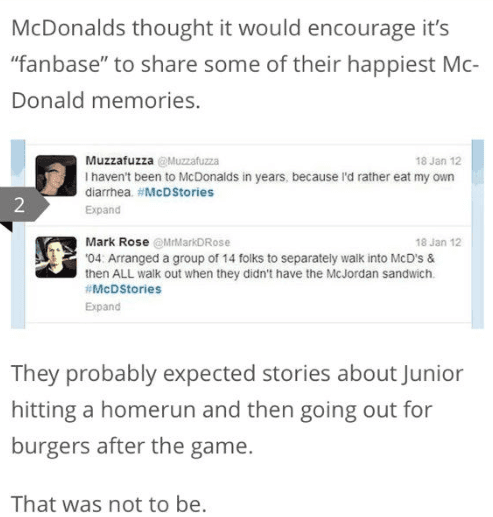 However, the campaign quickly spiraled out of control. Instead of celebrating joyful moments, users took to Twitter to air grievances, with complaints about poor service, food quality, and even health-related issues. Many users shared their negative experiences, using the hashtag to criticize the brand openly. McDonald’s didn’t anticipate this level of backlash and ended up removing the campaign shortly after it went live.
What went wrong?
The McDonald’s #McDStories campaign failed because it didn’t go as planned. Instead of people sharing happy memories, Twitter users used the hashtag to talk about bad service, health worries, and low pay at McDonald’s. This turned the campaign into a negative experience for the brand.
2. Coca-Cola’s #MakeItHappy (2015)
Coca-Cola’s #MakeItHappy campaign turned negative comments on Twitter into happy images to spread positivity. As part of the campaign’s mission, Coca-Cola used cheerful images associated with the Coca-Cola brand to counter the toxicity and negativity that often fills social media.
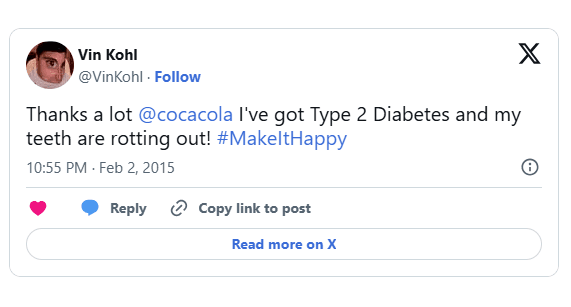 This concept started out heartwarming, but it quickly turned into a social media disaster. Consequently, trolls and internet users with malicious intent hijacked the hashtag and used it to spread offensive, hateful, and controversial content. It became associated with trolling and negative energy instead of spreading happiness. Coca-Cola ended the campaign much earlier than planned due to the backlash.
What went wrong?
Coca-Cola’s
#MakeItHappy campaign aimed to turn negative comments on Twitter into positive, colorful images to spread happiness. However, the campaign did not work as intended because some users took advantage of the hashtag to post offensive and harmful content. This misuse by online trolls overshadowed the campaign’s positive message and forced Coca-Cola to end the campaign early. The failure highlights how social media campaigns can be vulnerable to negative behavior and why monitoring and safeguards are essential when encouraging public participation.
These campaigns serve as cautionary tales about the unpredictable nature of social media. While a well-executed campaign can do wonders for brand perception, an unanticipated reaction can cause significant damage. To avoid missteps, brands should:
- Anticipate user behavior: Know your target audience and anticipate how they will respond to your campaign.
- Monitor closely: Social media is fast-moving, and things can go wrong in an instant. Have a team in place to keep an eye on the response and quickly address any issues.
- Set clear guidelines: If you’re asking users to engage with your brand in a specific way, make sure there are guidelines in place to ensure a positive experience.
- Have a crisis plan: Even with the best intentions, things can go wrong. Have a plan for damage control and make sure your team is ready to respond swiftly.
Why Social Media Campaigns Fail?
Social media campaigns often fail because they lack a clear plan, target the wrong audience, or don’t track their results properly. Other common problems include having unrealistic goals, inconsistent messaging, and relying too much on promotional posts. Ignoring the importance of visuals, not interacting with followers, and failing to keep up with changes in social media trends can also cause campaigns to fall short.

Poor Audience Research & Targeting
One major reason a social media campaign fails is poor audience research and targeting. Businesses must know their audience well. Without this knowledge, the content may not resonate with the target group.
Consider the following points:
- Demographics: Age, gender, income, and education level.
- Interests: Hobbies, likes, and dislikes.
- Behavior: Online habits, purchase history, and preferred platforms.
For example, a campaign aimed at teenagers should not use formal language. Similarly, a campaign targeting professionals should avoid slang. Tailoring content to the audience increases engagement and relevance.
Here is a simple table to illustrate the differences:
| Audience Type |
Content Style |
Platform |
| Teenagers |
Casual, Trendy |
Instagram, TikTok |
| Professionals |
Formal, Informative |
LinkedIn, Twitter |
Lack Of Engagement And Customer Interaction
Social media campaigns that fail due to lack of engagement are another common cause. The purpose of social media is to build relationships. If a brand does not interact with its audience, it misses out on valuable connections.
Ways to increase engagement include:
- Responding to comments: Shows that the brand values its followers.
- Hosting Q&A sessions: Allows direct interaction with the audience.
- Running contests or giveaways: Encourages participation and sharing.
Engagement is not just about posting content. It involves active participation in conversations. A brand that communicates well with its audience builds loyalty and trust. These are key elements for a successful campaign.
Overuse Of Automation & Ai Without Human Oversight
Automation tools and AI can help manage social media tasks. But overusing these tools without human oversight can be problematic. Automation should assist, not replace, human interaction.
Common issues include:
- Generic responses: Automated replies can feel impersonal.
- Mistimed posts: Scheduled posts may not align with current events.
- Lack of empathy: AI cannot understand emotions as humans do.
Balance is essential. Use automation to handle repetitive tasks. But ensure that human oversight is present. This approach maintains a personal touch and addresses issues promptly.
Misaligned Branding And Mixed Messages
Consistency in branding is crucial. Misaligned branding and mixed messages can confuse the audience. A clear and consistent brand message helps in building a strong identity.
Consider these points:
- Visual Identity: Consistent use of colors, logos, and design elements.
- Tone of Voice: Maintaining the same tone across all communications.
- Core Values: Clearly communicating the brand’s values and mission.
For instance, a brand that promotes eco-friendly products should not use excessive packaging. Consistency in actions and messages builds credibility. It ensures that the audience understands and trusts the brand.
Not Responding To Customer Complaints Effectively
Ignoring customer complaints can lead to a social media campaign failure. Customers expect timely and effective responses. Addressing issues promptly shows that the brand cares.
Best practices include:
- Acknowledging the complaint: Recognize the issue and apologize if needed.
- Providing a solution: Offer a clear and actionable solution.
- Following up: Ensure the customer is satisfied with the resolution.
Effective complaint handling can turn a negative experience into a positive one. It demonstrates commitment to customer satisfaction. This approach can enhance brand loyalty and improve the campaign’s success.
Insensitivity To Social And Cultural Issues
Culture and social issues should be considered when designing social media campaigns. A brand’s reputation could be damaged if it fails to do so.
Consider the following:
- Cultural Sensitivity: Respecting cultural differences and traditions.
- Social Awareness: Being aware of current social issues and movements.
- Inclusive Messaging: Ensuring that the content is inclusive and respectful.
For example, a campaign should avoid stereotypes and offensive language. It is essential to research and understand the audience’s cultural context. Sensitivity and respect can prevent misunderstandings and foster positive relationships.
How To Avoid Running An Unsuccessful Social Media Campaign?
Social media campaigns can be a powerful tool for brands. They can connect with audiences, drive engagement, and promote products. But not all campaigns succeed. Many fail due to poor planning, lack of insight, or missteps. So, how can you avoid running an unsuccessful social media campaign?
Data-driven Social Media Strategy
Building a data-driven social media strategy is crucial for success. Data provides insights into audience behavior, preferences, and trends. This helps create content that resonates with your target audience.
To develop a data-driven strategy:
- Gather information about your audience’s demographics, interests, and online activity.
- Analyze past campaign performance to identify what worked and what didn’t.
- Use social media analytics tools to monitor engagement and reach.
Consider using a table to track key metrics:
| Metric |
Definition |
Importance |
| Engagement Rate |
Percentage of audience interactions (likes, comments, shares) |
Shows content effectiveness |
| Reach |
Number of unique users who see your content |
Measures audience size |
| Click-Through Rate (CTR) |
Percentage of users who click on your links |
Indicates interest in your offer |
A/b Testing To Measure Campaign Effectiveness
To determine which campaign works best, A/B testing compares two versions. Social media efforts can be measured using this method.
Steps to perform A/B testing:
- Identify the element you want to test (e.g., image, headline, call-to-action).
- Create two versions (A and B) of the same content.
- Run both versions simultaneously to a similar audience.
- Analyze the results to see which version performs better.
Example:
| Element |
Version A |
Version B |
Winner |
| Image |
Product Photo |
User Testimonial |
Version B |
| Headline |
Save 20% |
Exclusive Offer |
Version A |
The Role Of Market Research In Social Media Success
Market research helps understand the target audience and market trends. This information guides the creation of relevant and engaging content.
Conducting market research involves:
- Analyzing competitors’ social media presence and strategies.
- Surveying your audience to gather feedback on their preferences.
- Keeping up with industry trends and changes in consumer behavior.
 Benefits of market research:
- Identifies gaps and opportunities in the market.
- Helps tailor content to audience interests.
- Increases the chances of campaign success.
Using market research, you can avoid failed advertising campaigns by aligning your strategy with audience needs.
The Dos And Don’ts Of Hashtag Marketing
The best hashtag marketing practices involve finding hashtags that are relevant to your content and audience. Creating your own unique branded hashtags can help build recognition. Use a combination of popular hashtags and more specific, niche ones to reach a wider but targeted group. It’s important to keep track of how your hashtags perform and adjust your strategy accordingly. Also, make sure your hashtags fit well with your posts and are used thoughtfully—not too many or too few—and spread them consistently across your social media channels.
Dos of hashtag marketing:
- Use relevant and popular hashtags.
- Create unique branded hashtags for your campaigns.
- Research hashtags to see what your audience uses.
Don’ts of hashtag marketing:
- Don’t use too many hashtags in one post.
- Avoid irrelevant or trending hashtags that don’t relate to your content.
- Don’t use long and complicated hashtags.
When And How To Apologize For A Failed Campaign
It’s important to apologize when your campaign offends or upsets your audience, contains errors or misinformation, or fails to meet their expectations. Offering a sincere apology shows that you respect your audience and take their concerns seriously.
To apologize effectively, you should address the issue quickly and honestly, taking full responsibility for the mistake. Explain clearly what went wrong and share the steps you will take to fix the problem. If appropriate, offer a solution or compensation to help make things right.
For example, you might say: “We apologize for our recent campaign that failed to meet your expectations. We understand your concerns and are taking steps to ensure it doesn’t happen again. Thank you for your understanding and support.”
How Brands Can Recover From A Failed Social Media Campaign
Brands can recover from a failed social media campaign by first acknowledging the failure honestly and analyzing what went wrong using data and audience feedback. It’s important to regroup with the team, brainstorm new ideas, and adjust the strategy to fix previous mistakes while building on what worked. Engaging openly and transparently with the audience, inviting their feedback, and responding sincerely helps rebuild trust. Brands should implement changes gradually, monitor their impact, and stay flexible to adapt quickly. Maintaining consistency and momentum through ongoing content and interaction ensures that the brand not only recovers but comes back stronger from the setback.
Public Apologies: How To Do It Right
An apology is often the first step in recovering from a failed campaign. When apologized poorly, things can get worse, so it’s important to get it right.
Here are some key elements to include in a public apology:
- Admit the mistake: Clearly state what went wrong. Avoid vague language.
- Take responsibility: Use “we” statements to show the brand is taking ownership.
- Show empathy: Acknowledge the impact on your audience. Show you understand their feelings.
- State corrective actions: Explain what you are doing to fix the issue and prevent it from happening again.
Consider this example:
| Do’s |
Don’ts |
| Clearly admit the mistake |
Blame others or make excuses |
| Show empathy and understanding |
Be defensive or dismissive |
| Explain corrective actions |
Offer vague promises |
Issuing a sincere and well-thought-out public apology can help repair some of the damage caused by a failed ad.
Rebuilding Consumer Trust After A PR Crisis
It takes time and effort to rebuild consumer trust. Brands should demonstrate their commitment to change after issuing a public apology.
Here are some steps to take:
- Engage with your audience: Actively respond to comments and messages. Show you are listening.
- Be transparent: Share updates on what the brand is doing to address the issue.
- Deliver on promises: Follow through with the actions you promised in your apology.
- Highlight positive changes: Use social media to showcase improvements and positive initiatives.
Transparency and consistent communication are key. Brands that demonstrate genuine efforts to make amends can gradually rebuild trust with their audience.
Successful Turnarounds: Brands That Bounced Back
Several brands have successfully recovered from failed campaigns. They turned their mistakes into opportunities for growth.
Here are some examples:
- Domino’s Pizza: Faced with criticism over the quality of their pizza, Domino’s launched a transparent campaign showing how they were improving their recipes and ingredients. The campaign was well-received, and they regained customer trust.
- United Airlines: Following a PR crisis, United Airlines implemented new policies and improved customer service. Making positive changes and addressing the issue helped them recover.
With the right approach, a failed campaign can become a stepping stone to success.
How To Turn Negative Publicity Into A Positive Outcome
Negative publicity doesn’t have to be the end. Brands can turn a PR crisis into a positive outcome with the right strategy.
Consider these tactics:
- Leverage the attention: Use the increased attention to highlight positive aspects of your brand.
- Showcase improvements: Demonstrate how the brand is learning and growing from the experience.
- Engage in positive actions: Launch initiatives that reflect your brand’s values and commitment to improvement.
One example is the brand KFC. When faced with a supply chain issue that caused a chicken shortage, KFC used humor and transparency to address the issue. Their clever and honest response turned a negative situation into a memorable and positive outcome.
Turning negative publicity into a positive outcome requires creativity and a willingness to embrace change.
Key Takeaways From Unsuccessful Social Media Campaigns
Brands can benefit from social media marketing. There are, however, campaigns that do not succeed. Lessons can be learned from unsuccessful social media campaigns. Understanding these can help improve future efforts and avoid common pitfalls. Here are the key takeaways from unsuccessful social media campaigns.
Dos And Don’ts Of Social Media Marketing
To avoid failure marketing campaign, follow these dos and don’ts:
- Do research your audience. Knowing their preferences and habits helps create relevant content.
- Do engage with your followers. Respond to comments and messages promptly.
- Do use analytics. Track performance to understand what works and what doesn’t.
- Don’t ignore feedback. Listen to your audience and make necessary adjustments.
- Don’t post too often. Oversaturation can lead to unfollows.
- Don’t use offensive or insensitive content. It can damage your brand’s reputation.
Here is a table summarizing key points:
| Dos |
Don’ts |
| Research your audience |
Ignore feedback |
| Engage with followers |
Post too often |
| Use analytics |
Use offensive content |
How To Ensure Brand Messaging Resonates With Your Audience
Ensuring brand messaging resonates is crucial to avoid worst campaigns. Here are steps to achieve this:
- Know your audience. Understand their values and interests.
- Be authentic. Genuine messages build trust.
- Stay consistent. Keep your brand voice uniform across all platforms.
- Use storytelling. Stories are memorable and engaging.
- Test your messages. Use A/B testing to find what resonates best.
Consider these strategies for effective brand messaging:
- Conduct surveys to gather audience insights.
- Create content that reflects your brand’s core values.
- Monitor social media trends to stay relevant.
Conclusion
Unsuccessful social media campaigns offer valuable lessons. Understand your audience better. You should create engaging messages that are clear and concise. Make sure your strategies are tested before launching. When things go wrong, adjust quickly. Always keep an eye on trends. Stay flexible and creative.
Success comes from learning and adapting. Your next campaign can be better. Aim for connection and understanding.
